
(Psst.. Before I designed websites, I designed rooms.)
It started with a blog about my own home projects more than fifteen years ago (well it might have actually started when I toured Ryerson University’s Interior Design Program back in high school). That blog turned into an interior designer website of my own, full gut renovations for clients, then commercial spaces like coffee shops and spas. Then one of those clients, 692 Coffee and Bar, asked if I could do their branding and website too. I said yes. And that's how Ash Izsak Studio became a brand and web design studio. Want the full story - read it here.
So when a interior designer tells me website isn't bringing in the right clients, I get it. I've been on both sides of that inquiry form.
The short answer:
A great interior designer website does six things: it starts with beautiful project photography - which immediately tells the story behind each project, it makes your services and - ideally starting investment clear, it shows your process, introduces the who you are / the person behind the work, and makes it easy for the right client to inquire (and gently filters out the wrong ones).
Most interior design websites get the first one right. The other five are where the leads are.
Interior design website essentials
1. Photography that does the selling
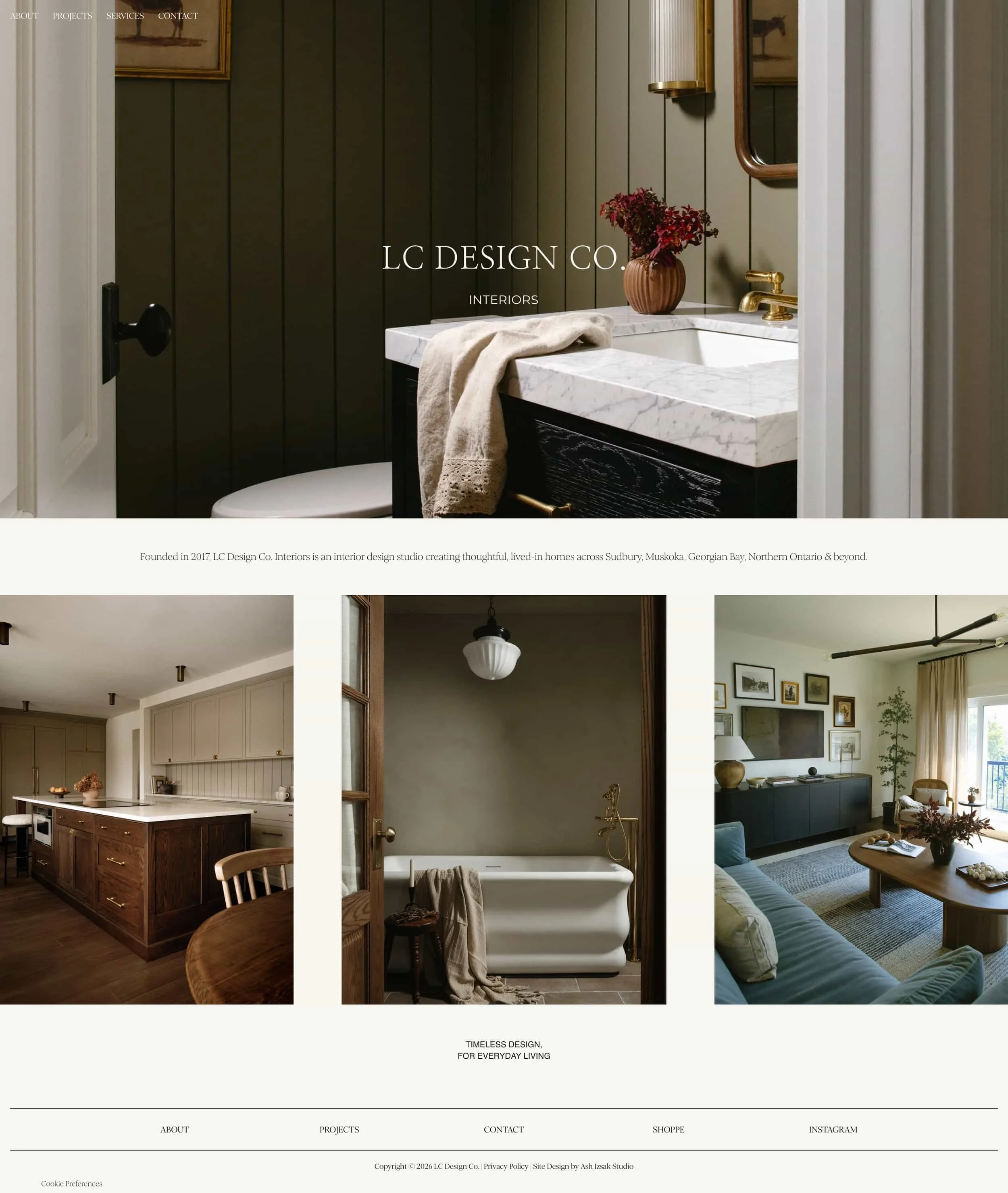
Your clients are buying a feeling before they're buying a service. Give your photography room. Big, full-width images on your interior designer website. Fewer projects, better shot.
And let’s do quality over quantity please. Six incredible projects will book more clients than twenty-five okay-ish ones. Edit ruthlessly!
One practical note: make sure you (or your web designer) compress your images. Beautiful photos that take eight seconds to load are not beautiful to the Google gods, (or to someone scrolling on their phone in the car pickup line).
2. Case studies, not just galleries
A gallery shows what a room looks like. A case study shows what it's like to hire you.
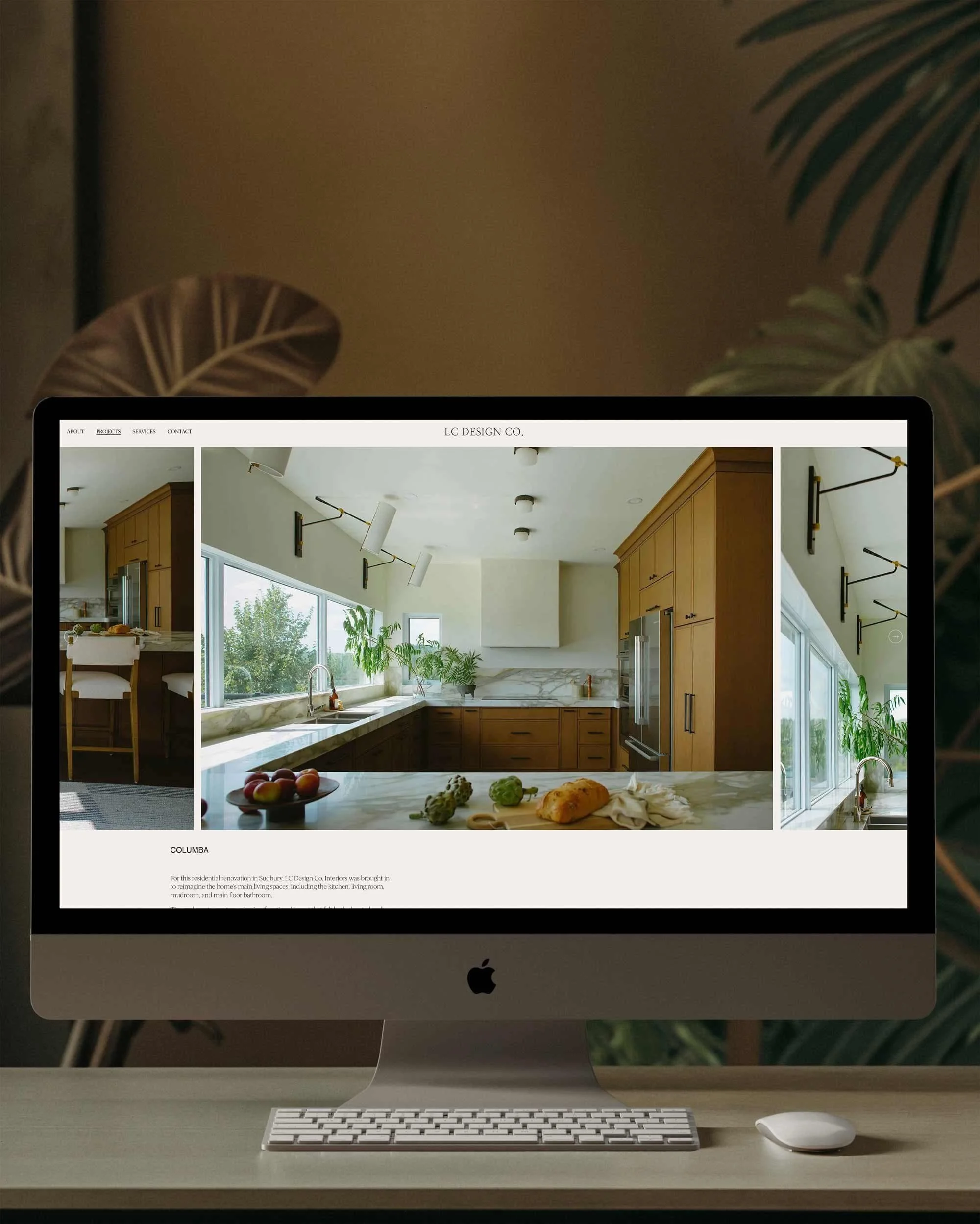
For each project on your interior designer website, add a few short lines on: the brief (what the client wanted, and what wasn't working), the scope (full gut renovation, furnishing only, a single room), the location (this one quietly helps your local SEO), a before photo in certain circumstances (my rule of thumb here - if your business is more focused on mid range clients who need help visualizing what the transformation could look like - include a before. If your business targets high end clients and luxury interiors leave it off), and bonus points for including a testimonial quote from the client!
Name your project pages the way people search, like "Modern Mid Century Kitchen Renovation, Manotick" instead of "The Smith Project."
3. Clear services and a starting investment
This is the one designers resist the most. I understand. Every project is different.
But a simple "Full-service projects typically start at..." does two things. It tells your dream client they're in the right place, and it saves you from discovery calls with people who were hoping for a $3,000 living room. (AI crawlers also love a good pricing reference). You don't need a price list. You need a starting point.
4. Your process
People who have never hired an interior designer are a little nervous about handing over the reins to their home (and their money to be frank). Walk them through what happens: from discovery call, to concept, to design, procurement, and installation. Four or five steps, a sentence or two each. It makes the unknown feel manageable, and it positions you as the expert before you've even spoken.
5. An About page with your face on it
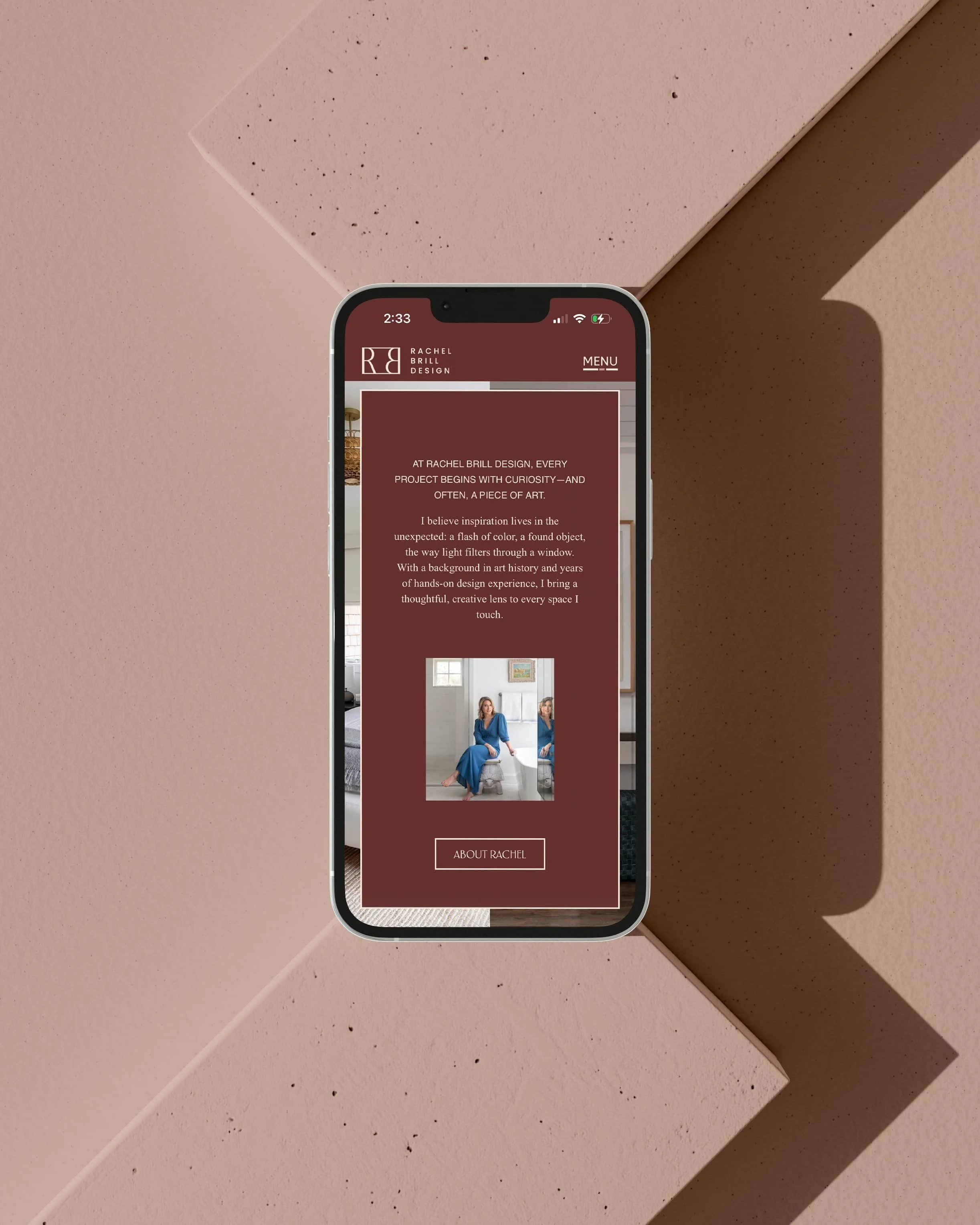
You'll be in their home, making decisions about where they eat dinner and where their children might do their homework. They want to know who you are. Use a real photo, get a professional one please - and tell your story letting your personality show. (Your About page is probably one of the most visited pages on your site. Treat it that way.)
6. An inquiry form that qualifies & A direct way to book An Initial Call
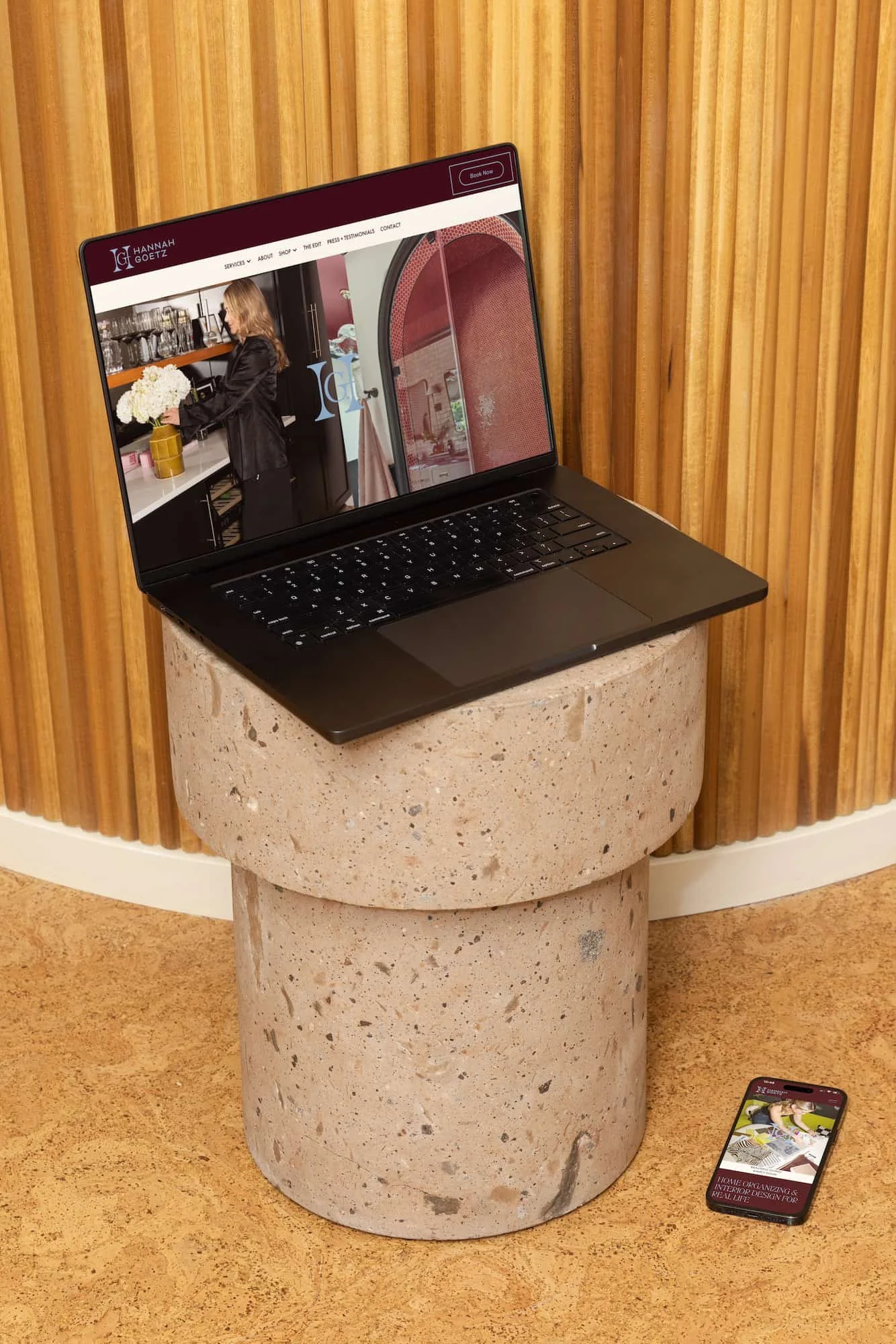
"Contact us" with a name and email field isn't enough. Ask for: project type and location, a rough timeline, an investment range, how they found you (so you can get a better understanding of where to focus your marketing efforts). Consider connecting it to your client management tool (Dubsado, HoneyBook), and a calendar management tool like cal.com - see it live on this website and on client Hannah Goetz’s website, so a great lead doesn't sit in your inbox for four days.
How interior design clients actually search now
Your future client might type "interior designer near me" into Google. Or they might ask ChatGPT, "Who's a good interior designer for a kitchen renovation in Ottawa?"
To show up in both:
Put your city and service area on your homepage and project pages
Add an FAQ section to your services page (with FAQ schema ideally, if your designer can add it)
Keep your Google Business Profile up to date with real project photos (when you post on social media - add it to your Google My Business profile as well)!
Get listed on directories like Houzz to increase your site authority
Ask happy clients for Google reviews that mention the project type
The mistakes I see most in interior design websites
(Please, please, please - at a bare minimum make sure your interior design website is mobile friendly)
Now that I’ve gotten that off my chest here are four more mistakes you’ll want to fix asap on your website:
A downloadable PDF portfolio instead of project pages Google can read, and AI can crawl
Tiny thumbnail galleries with no story
No location anywhere on the site
A website that was "fine" five years ago and no longer matches the work
SEE MY INTERIOR DESIGN BRAND & WEB DESIGN PORTFOLIO
Which platform is best for an interior design website?
For most interior designers, I recommend Squarespace. It gives me a lot of room to design something that feels like your brand, it handles big imagery well, and you can update your own projects without calling me. Loath technology? I now offer fully managed self hosted websites. If you also run an interior design studio and also a shop with lots of products, Shopify - or a hybrid model might make more sense. Unsure - book a complimentary call with me to talk it through.
FAQs
-
It depends on the platform and how custom you want to go. At Ash Izsak Studio, custom Squarespace websites start from $5,400, and most interior designers choose the Signature package, from $9,700.
Looking for a fully managed website, I now offer custom coded fully managed interior design websites on a monthly plan.Book a complimentary discovery call with me to learn more about pricing options.
-
At minimum: a homepage, portfolio with individual project pages, services, process, about, and contact. A journal or blog and location pages help hugely with SEO.
-
You don't need a full price list, but sharing a starting investment helps qualify leads and saves you time on calls that aren't a fit.
-
Yes. Ash Izsak Studio is based in Ottawa and works with clients across Canada, the US, and beyond.
-
Yes (and I prefer it)! I design brand identities on their own or alongside a website.
So, where do you start?
Maybe it's actually quite simple. Your work is already good. Your website just needs to show it in the same way you'd walk someone through a finished room: slowly, with the story, and with a clear next step.
If your website isn't doing that yet, take a look at my websites for interior designers page, or book an intro call. I speak fluent interiors.

